The sheet
There was a sheet. An ordinary one, the kind you print and stick on the fridge: the tables from 2 to 12, each with a QR code. You pointed the camera and a game opened in the browser. Twenty-two games, one per table and operation.
They worked. But each one was an island: no memory of what you already knew, no place where they could all live together.
What if those twenty-two islands were a single world?
A silly idea
I wanted a place made of blocks, round and soft, where the frog hops, the rope gets pulled and every right answer builds something. Chileans call maths “mate”, and I wanted a “mate” that made you want to come back.
I copied nothing from those games: I kept the teaching ideas — a trick for each table, a helper when you slip — and invented the rest.
And from the very first line it was an app: an iPad game that works offline and lives on the Home Screen. The website did not exist yet.
A Saturday
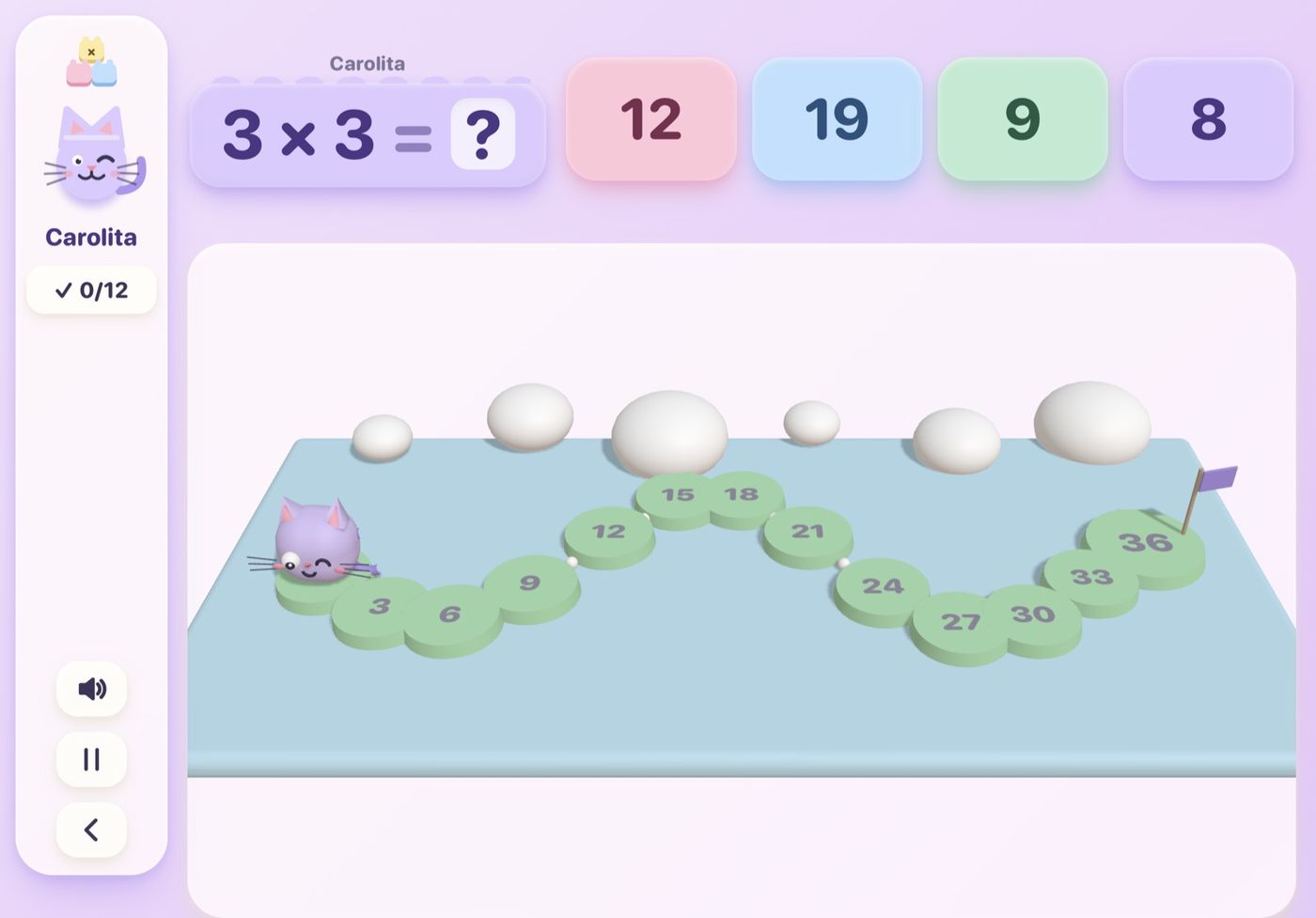
At 12:42 I saved the first change. By nightfall there was a frog hopping across lily pads, a cat as an avatar, four languages and motion sensors: tilt the iPad and the world shifted behind the blocks.
Past midnight, the first extra idea showed up: a “problem of the day”.
I wasn’t alone
I worked in tandem with an artificial intelligence. I decided what stayed and what went; it wrote the code, hunted bugs and prepared things that would have taken me weeks. It also generated thirty-eight tunes with Lyria and the illustrated scenes with Nano Banana.
It was never “press a button”. It was one long conversation, with plenty of “no, not like that” and a few “yes, now”.
Three worlds
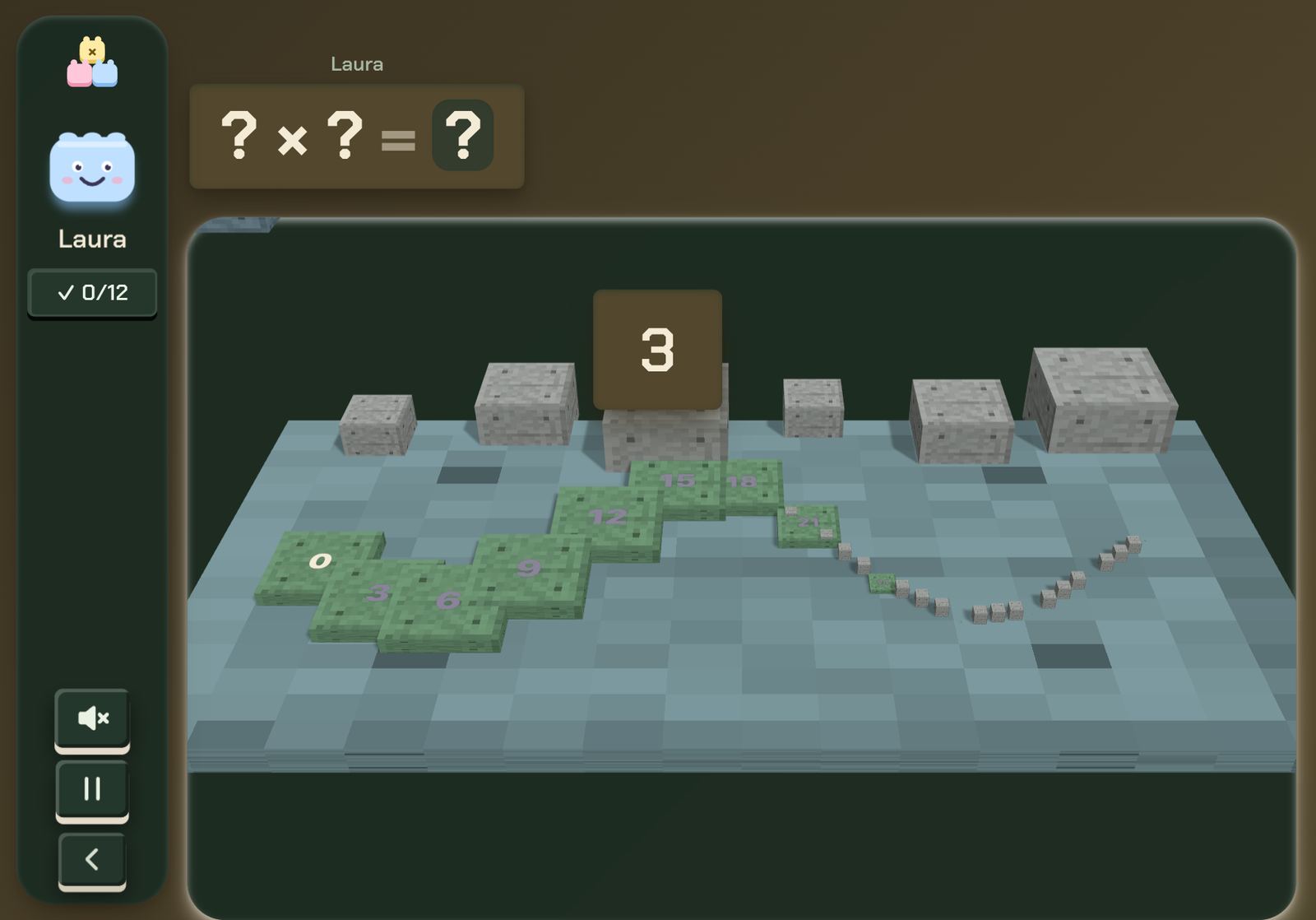
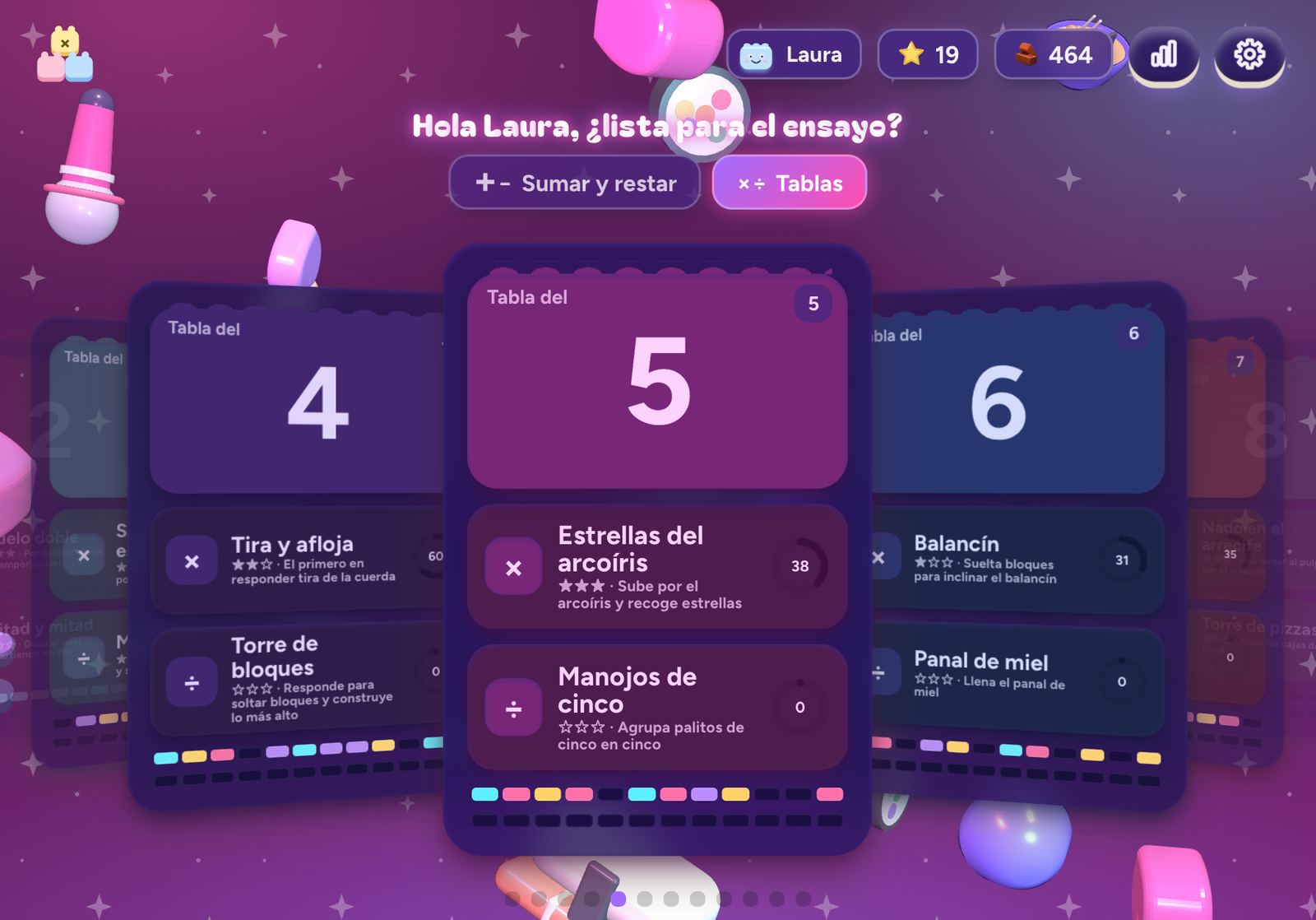
I learned something watching kids: they don’t all want the same world. So the game has three. A soft one of toy blocks; one of cubes, planets and ships; and one that looks like a K-pop stage, with sushi, ramen and microphones floating by. Same games, three souls.
The problem of the day, in a drawer
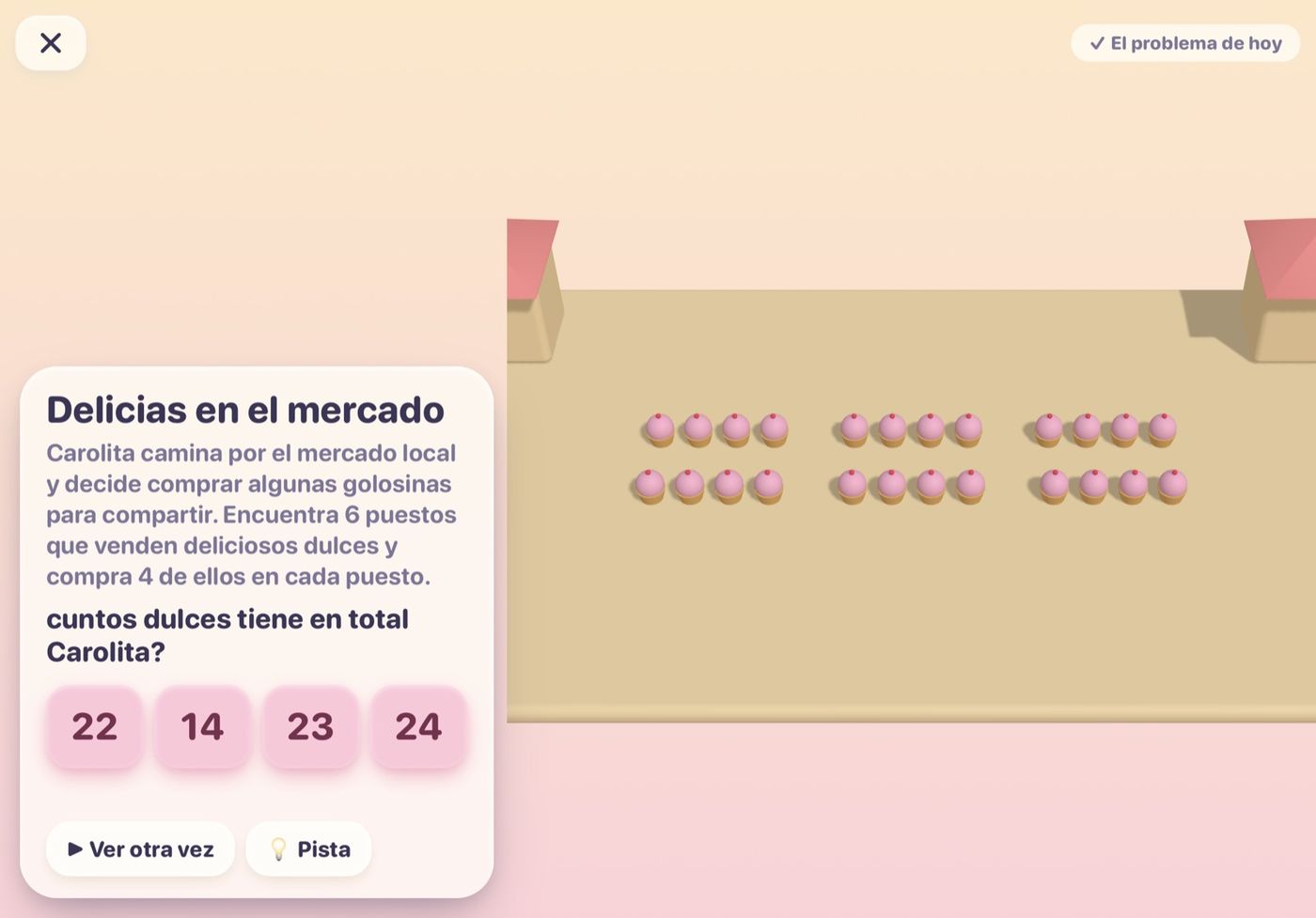
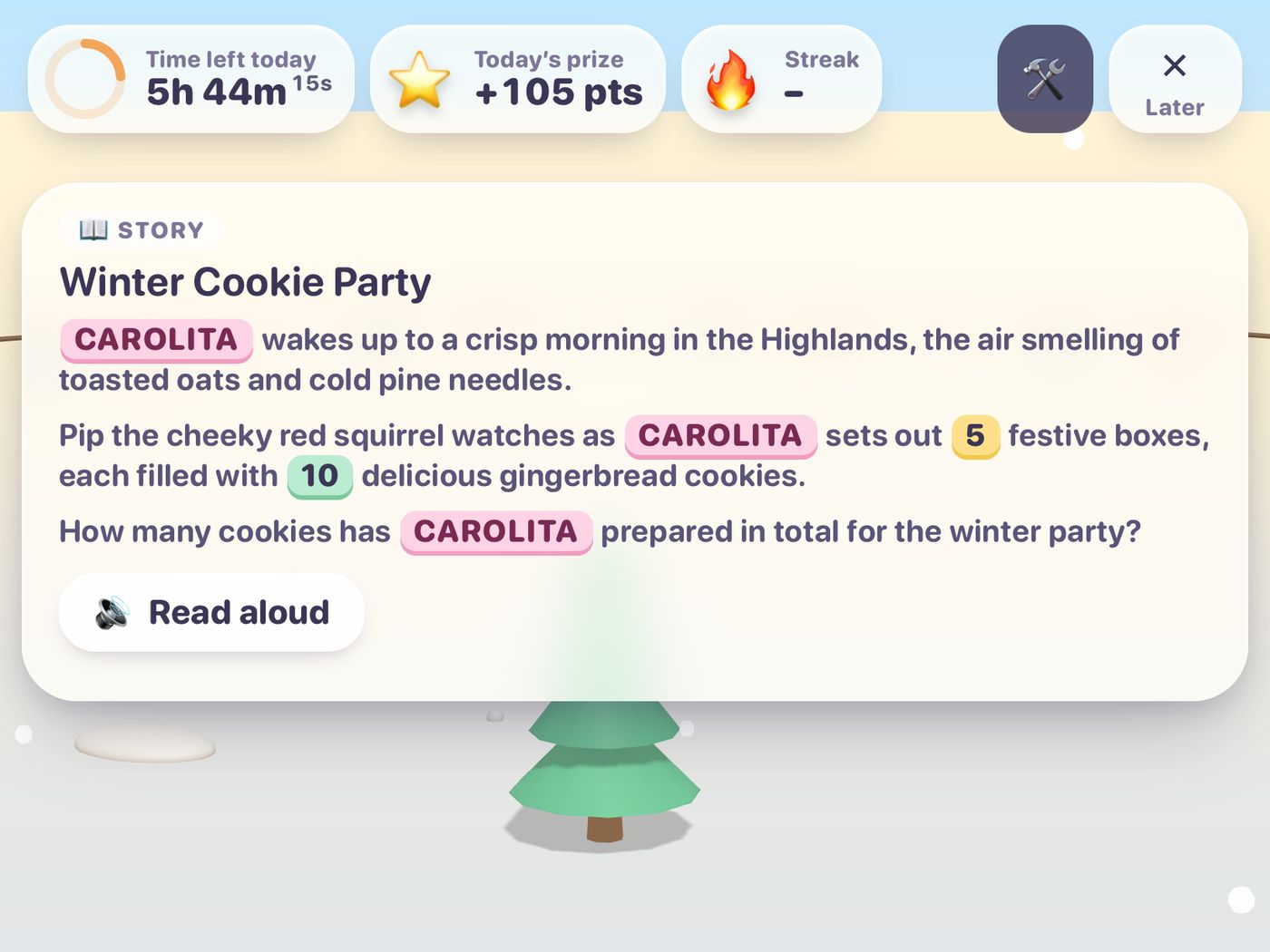
I built a “problem of the day”: an AI-written story, a 3D scene, a countdown and music. I redesigned it twice looking at iPad screenshots until it felt like a small teaching tool. It was lovely.
And I put it in a drawer, on purpose. Doing it right needed a server, and I wanted this first version to know nothing about anyone. Learning, even for the builder, is choosing what not to do today.
Laura is five verbs
The app was born with a first name: Laura. But a first name is small for a game I want to share with everyone. So I turned it into five verbs that do any child good:
Monday
By Sunday night it was ready to travel: no debug tools, with its privacy manifest and a store listing in four languages. On Monday I tested it with nearly a hundred automated playthroughs, found one real bug, changed its name and uploaded it to the App Store. Now it waits its turn to go public.
The website came later
With the app finished I realised something: many people do not have an iPad at hand, or just want to try before installing. Because the game is built with web technology, I could bring the same app to a browser almost unchanged.
That is this page. The game is the same; what changes is where your progress is kept (here, in your browser) and that it has no motion sensors. The app is still the main version.
Why it’s free, and why everything stays in your browser
Because I believe the times tables belong to everyone. Today the game is free and has no ads.
And because the most respectful thing I can do with a child’s data is not to hold it. That’s why here everything is saved in your browser, and in the app, on your iPad. If a server is ever needed, I’ll tell you first.
Thanks for playing.
Want the technical details — early versions, bugs and how they were fixed? They’re in the case study.